
10 things I can’t stop thinking about after Bologna: my notes from BCBF as an illustrator
Bologna was a month ago. Here's what I'm still thinking about...

Hi everyone!
It’s been a minute! How are you? I’m finally coming up for some air after an extremely busy (but good) period.
So hi, hello, and it’s good to be back on Substack!
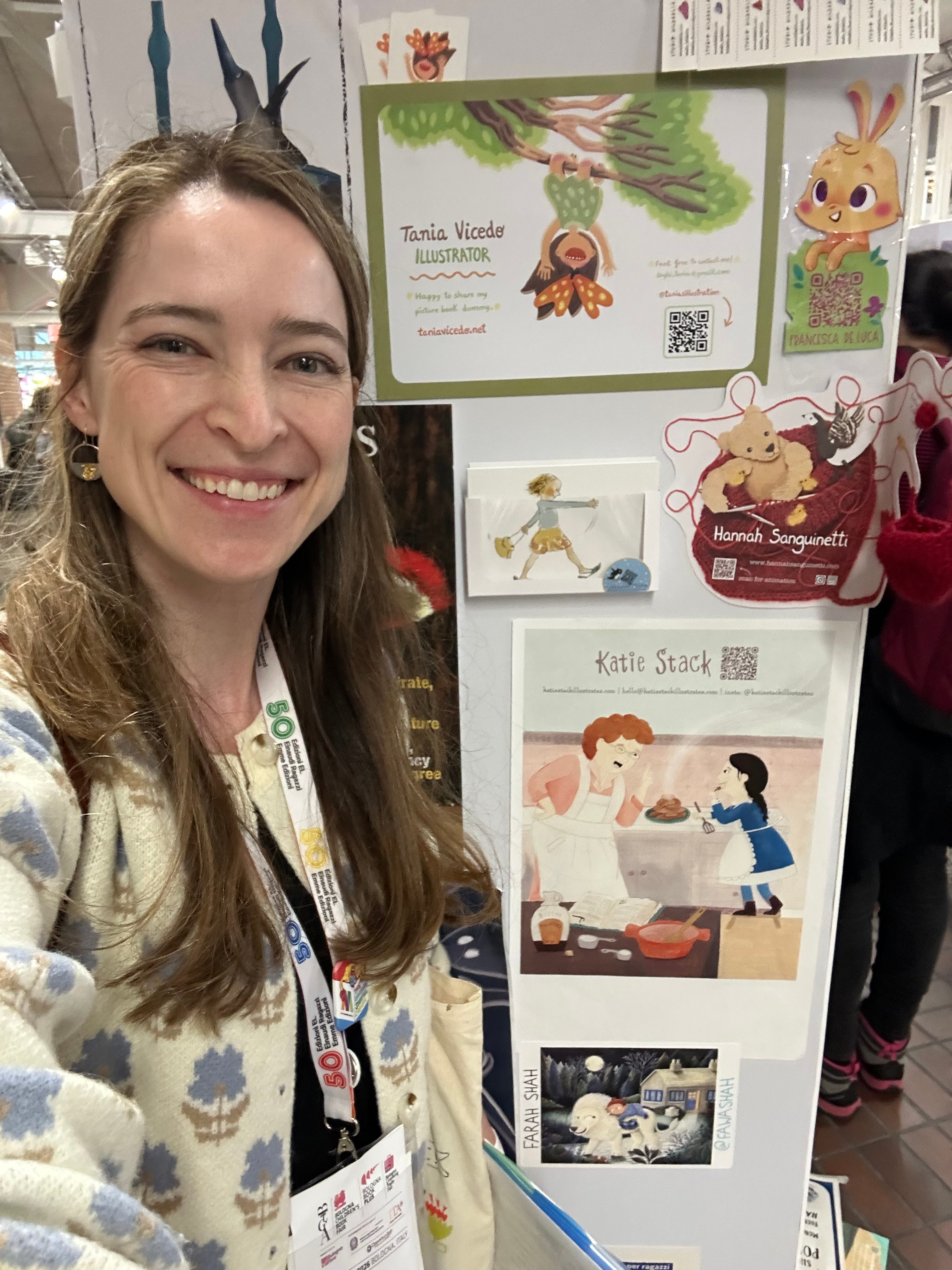
I attended the 2026 Bologna Children’s Book Fair in April, took tons of notes and compiled them into 10 key takes aways for you. So here are my notes from BCBF as an illustrator:
10 THINGS I CAN’T STOP THINKING ABOUT AFTER BOLOGNA
(1)
“The answer to AI is lovely human imperfections.”
- Ivan Canu, Director, Mimaster Illustrazione
There was so much incredible, messy, organic art at the fair this year. Maybe this is in response to AI, maybe not. But what I loved seeing were the imperfect lines, smudges, wonky characters, and other clues that the art was made by an actual human artist. This sentiment was shared in a lot of panels, talks, and masterclasses. AI has nothing on human artists, and everyone there knew that. So let’s keep creating 💪
(2)
Where’s the surprise?!
Judges of the renowned Illustrator’s Exhibition said they wanted to see something new and surprising in the winning pieces. Maybe a unique material (like sand!) or fresh way of using color or maybe unexpected subject matter. This idea of newness seemed way important than technical skill or perfection. So maybe we can ask ourselves, “What makes my art original?”
(3)
Get outside before you draw!
During a panel, Vicki Willden-Lebrecht of Bright Agency talked about originality. She noted a trend in the post-Covid world: there seems to be more regurgitation of ideas and less originality. To combat this, she has a simple solution: Get outside before you draw and soak up real world inspiration.
This is such a practical tip and I have actually been doing it since arriving home! My sketchbook now has weird little ideas in it… like I walked past a small potted basil plant on the street that had two plastic forks sticking out of it… Why was it there? I don’t know, but you could make a story out of it.
(4)
Finding balance as an artist is hard. A community helps.
I attended a talk with illustrators Sophie Blackall and Sergio Ruzzier, who shared a studio space for years (with other artists too). They shared how valuable it was to have this community to share work, support each other, and just to be human! Because it truly is challenging to find balance as an illustrator, and it is difficult to work alone.
As a side note, these two were so engaging and funny. I felt like I was a stand up show, and I think that speaks to the importance of who we surround ourselves with and also how we share our work, talk about it, etc… We go farther together and we don’t need to be so serious… we just need to be ourselves!
(5)
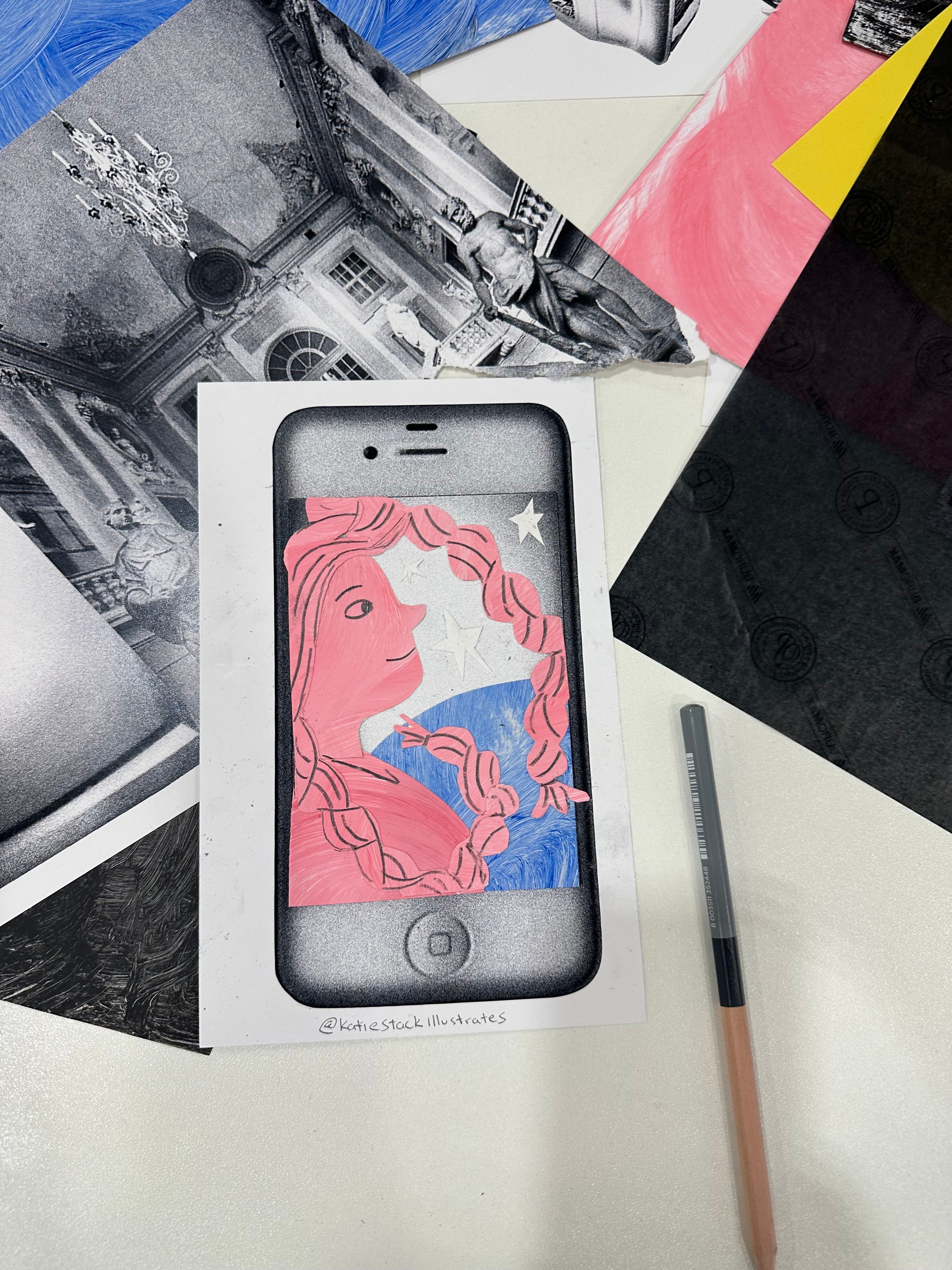
I attended two workshops. I have a take-away from each:
Workshop take-away #1: How much space do your characters take up?
And are they doing the action, or is the action happening to them? Which character is taking up more space, and was that intentional or subconscious? We can promote gender equality by being intentional about composition, poses, and even colors.
Sure, we could give a female character an outfit that feels masculine, or we could show boys with nail polish, but that’s very surface level. By thinking about space, poses, actions, etc… we can reach a deeper level. For example, in Alice in Wonderland… is it possible to show Alice jumping down the hole versus falling?
This inspiring workshop, hosted by the UN Women ECA, was led by talented artists and journalists: Jenya Polosina and Anna Ivanenko.
(6)
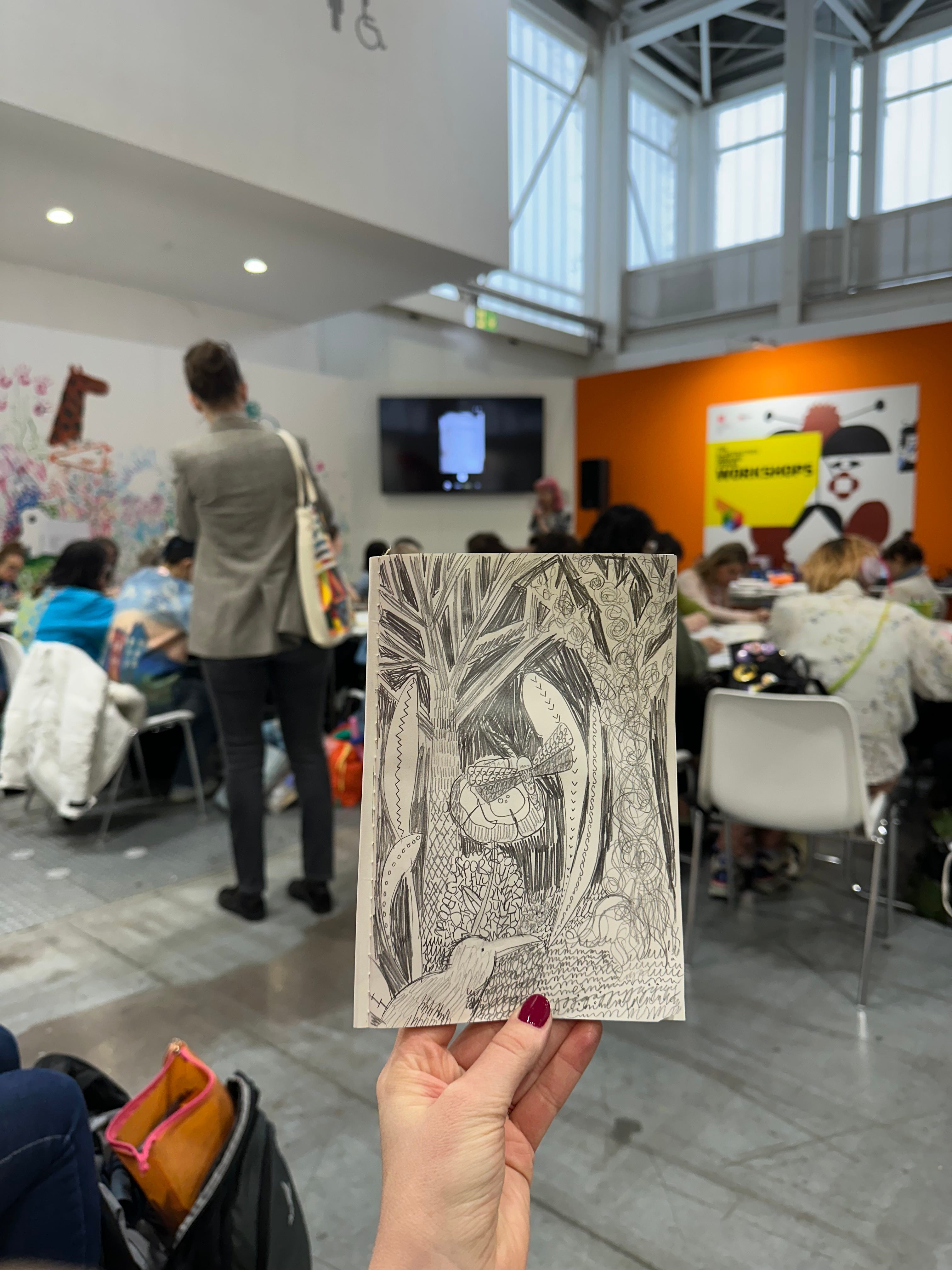
Workshop take-away #2: You don’t need fancy supplies to create art.
The fabulous and talented Kate Cosgrove showed us how to create texture by drawing letter shapes with a regular ole mechanical pencil. It was really inventive, loose, and a even meditative.
Also, she said that, during school visits, she wants kids to know that you can create art with anything. You don’t need expensive materials. I love how accessible she is making art.
(7)
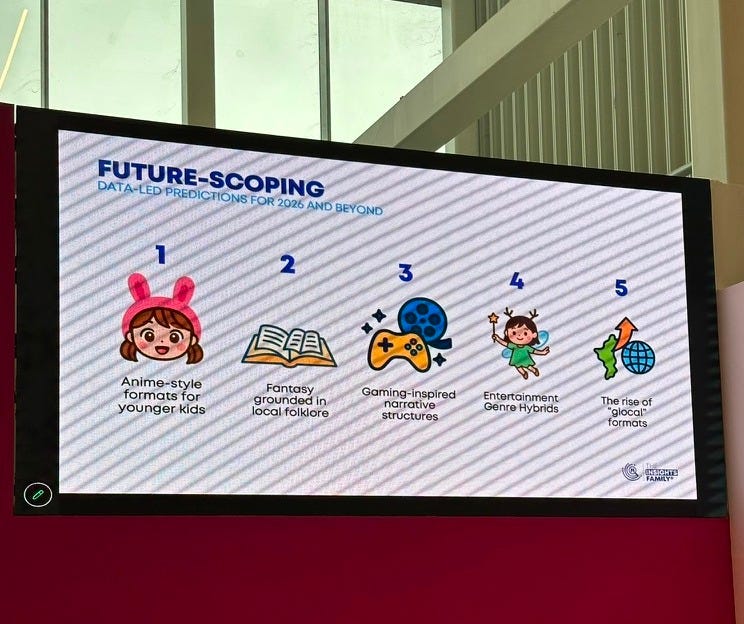
Stories are becoming borderless.
Adam Woodgate from The Insights Family shared data showing that kids are curating their own hyper-specific content through algorithms. These kids want genuine stories that connect to their experiences and interests, regardless of where the stories come from.
This is cool because it means instead of needing to create general stories that cater to a global audience, it’s now possible for super specific stories to do well in the market!
(8)
But what about the boys?
Did you roll your eyes? I did too when Francesca Cavallo said this during a panel, and that is exactly why this paragraph is important…
Francesca Cavallo, the bestselling author of Good Night Stories for Rebel Girls, discussed how the children’s market has exploded with content showing that girls can be anything, but at the same time, boys only get books that tell them it’s okay to cry or wear dresses– traditionally the opposite of masculine culture, rather than books that invite them to be truly anything, even if it means a traditional male stereotype.
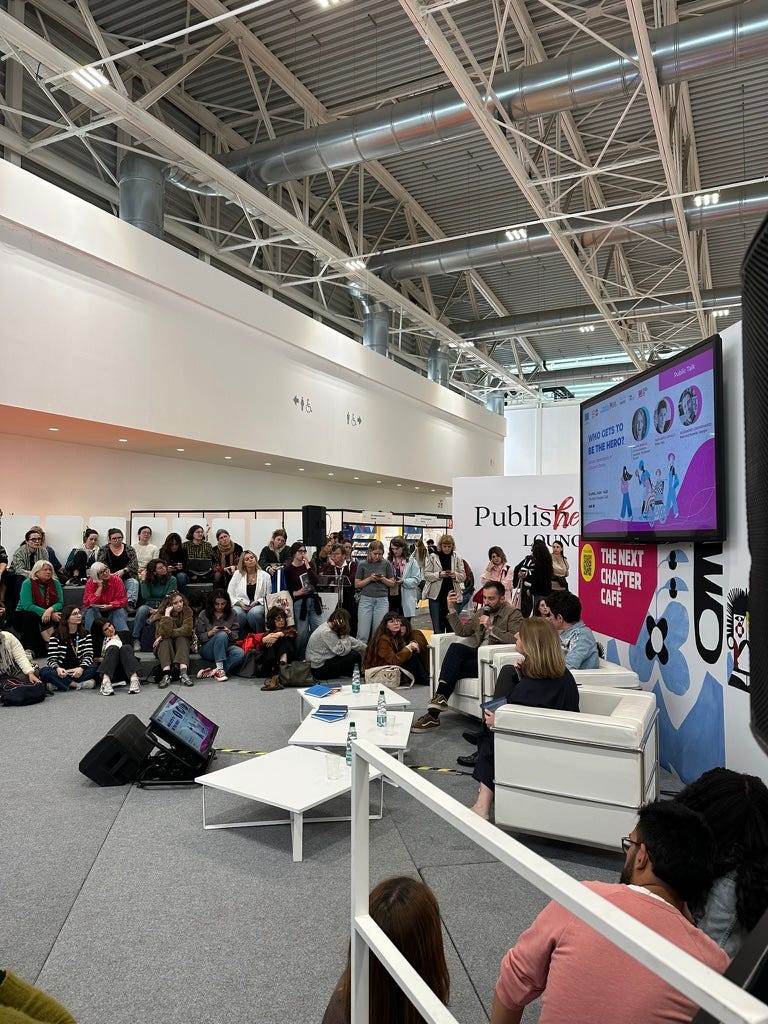
Another gap for boys is literature that shows them how to become citizens of the world. Girls have these books, but boys do not. So she is now writing books to fill this gap for boys.
This is a mindset shift for me. Generally I take every chance I get to switch gender roles, make the leading character female, challenge patriarchal ideals, etc… So this was is an different perspective for me to consider, and I wanted to share it here.
(9)
The strongest work feels personal and specific.
During a tour of the Society of Illustrators Exhibition, Steve Compton, Director of Exhibitions & Collections at Society of Illustrators, said that year after year, the winning stories are unique and personal to the illustrators. For example, a book about corn farming won this year, and that is super specific!
So let’s lean into our personal experiences! The stories that are unique to us are the ones that will capture others’ attention.
(10)
Maybe style doesn’t matter as much as we think?
Across multiple exhibitions, the award winning work was made with materials ranging from embroidery to sand art to gouache to line drawing and everything in between.
But what seemed to matter more than the style and materials was the story itself and how it was told: genius compositions, daring color, and surprising narratives. That’s what stood out to me the most while walking around the various exhibitions, and it’s something I’ll be thinking about for my own work.
Did any of these stand out to you or surprise you?
Or if you were at Bologna this year or in the past, did you notice any of the same things at the fair?
I’d love to hear your thoughts!
-Katie
PS - We have a free Art Gym workshop on Tuesday, May 26. Sign up here!
Thanks for this! I’m not an illustrator but I think these ideas apply to writing too!
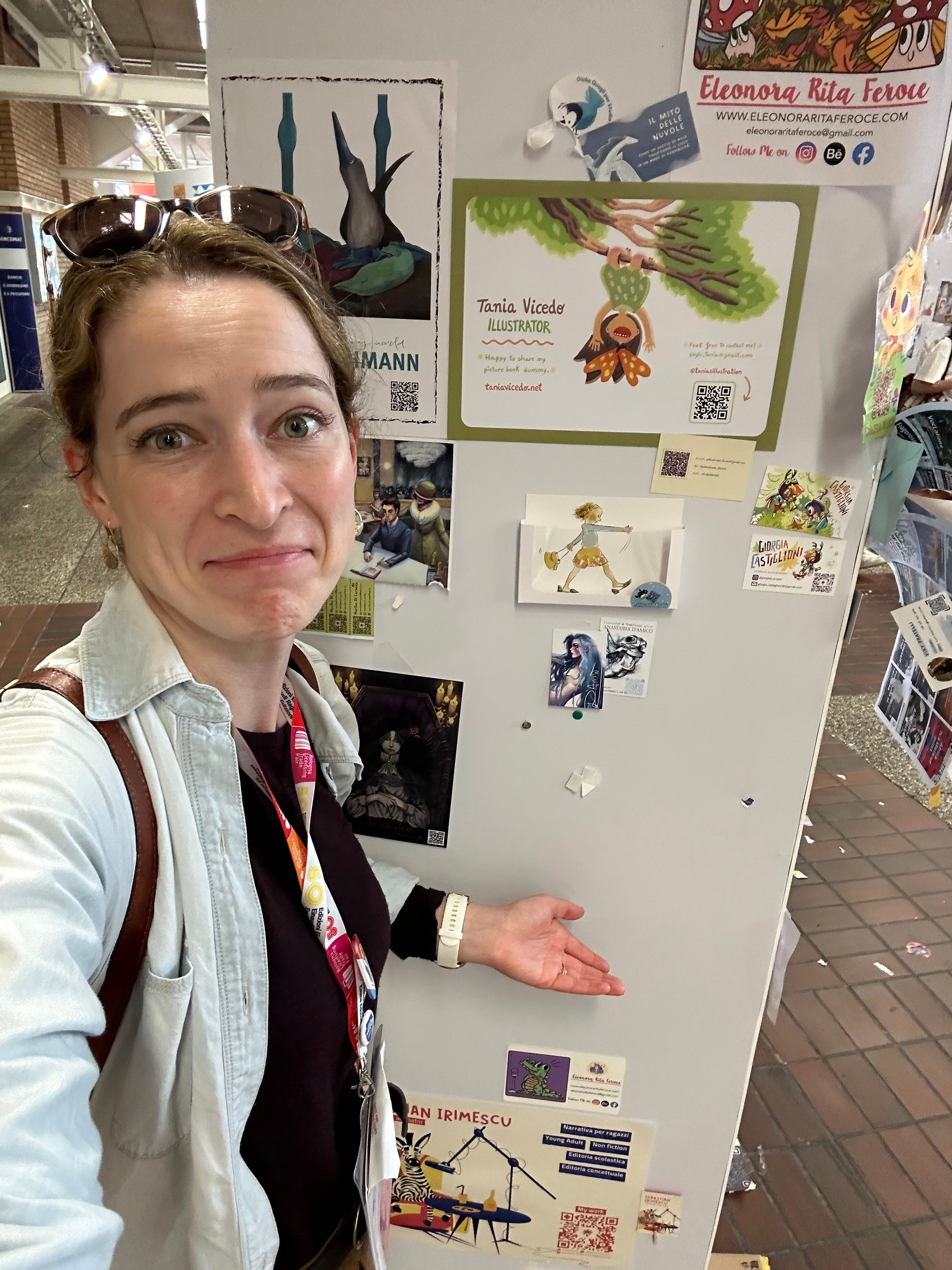
This was so interesting to read Katie, thank you. Some of your perspectives I saw too; the importance of genuine story and communication through bold ideas or techniques rather than just technical skill in illustration, and the very important human touch came through to me at the fair too. Well done for managing to attend so many talks and workshops! I love the before and after pictures of the illustrators wall with both of our artworks gone. 😂